Claims
AI Data Center Boom Starves Auto Industry of Basic Chips
By Insurance Wire Staff, . Insurance Wire.
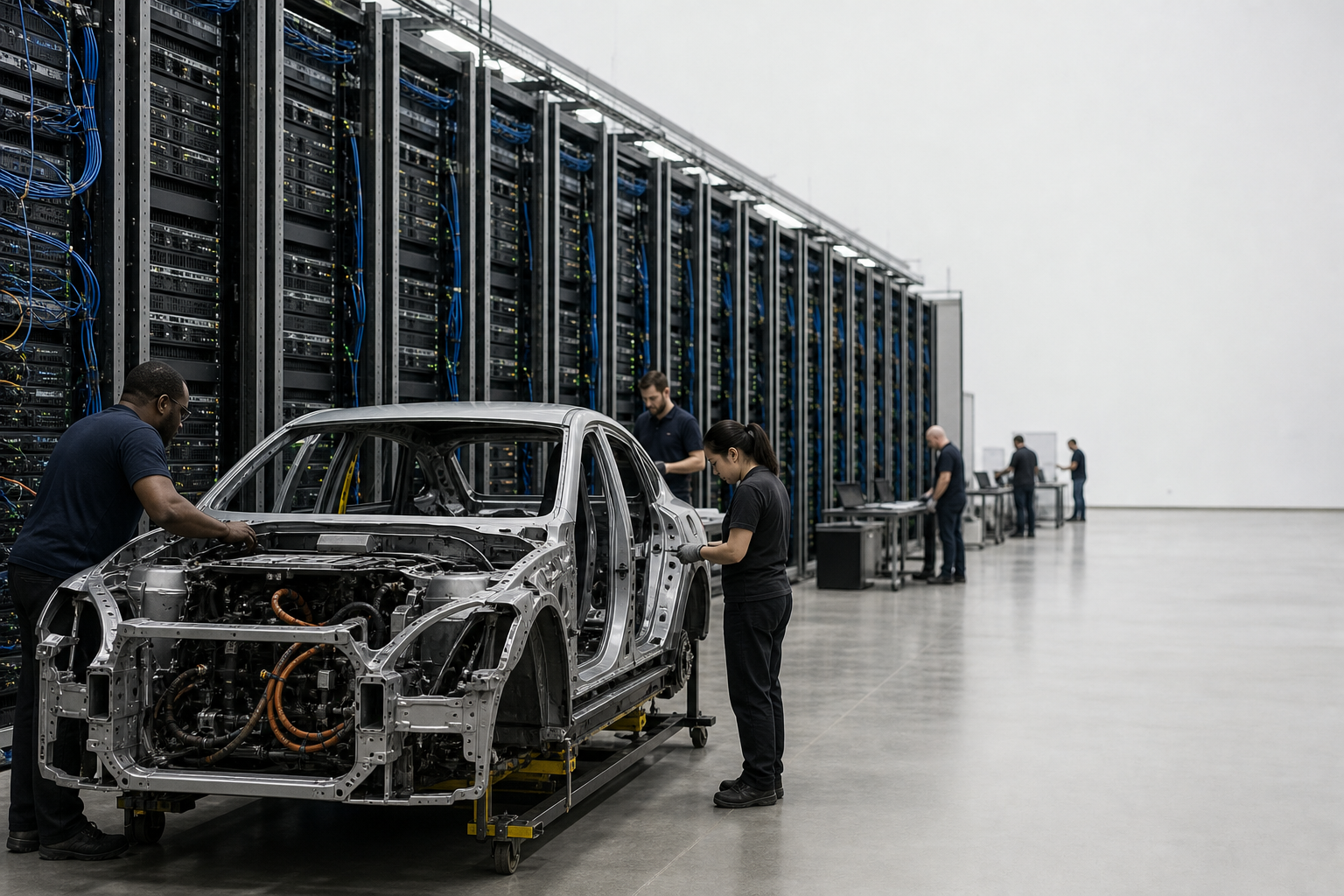
The surge in investment in artificial intelligence is creating an unexpected casualty: the automotive industry's access to the unglamorous, low-cost chips that keep cars and industrial equipment running.
Stefan Tilger, interim chief executive of Dutch chipmaker Nexperia, told Reuters at the Electronica trade fair in Munich this week that his company is "totally oversubscribed." The reason, he said, is that competing suppliers have shifted their manufacturing capacity toward the higher-margin semiconductors demanded by AI data centers, leaving automakers short of the basic components they need.
"The automotive industry is suffering at the moment quite heavily," Tilger said.
Jean-Marc Chery, chief executive of STMicroelectronics, issued a parallel warning at a CEO panel ahead of the same conference. Chery said foundries and chip-packaging companies, the firms that manufacture and assemble semiconductors for others, were increasingly pulling back from products used in cars and factories. "We see many bottlenecks," he said. Some of those firms, he added, "are disengaging … from mainstream technology."
What is actually running short
The chips at issue are not the cutting-edge processors powering AI models. They are mature-node components: diodes, transistors and similar basic parts that have been manufactured for decades and are embedded throughout modern vehicles and industrial machinery. Nexperia specializes in exactly this category, producing high volumes of low-cost semiconductors for the auto sector.
Tilger said demand from AI data centers and robotics was absorbing the manufacturing capacity that would otherwise produce these parts, while investment in the older fabrication technology needed to make them had lagged for years.
Chery noted that STMicroelectronics has some insulation from the problem because it owns a portion of its own manufacturing. "We control a part of our future with our CapEx and our manufacturing," he said. Companies that rely entirely on outside foundries have no such buffer.
Why this matters beyond the factory floor
For insurers and claims professionals, a constrained automotive supply chain is not an abstract concern. When vehicles cannot be repaired quickly because parts are scarce, repair times lengthen, rental car costs accumulate and total-loss thresholds are reached sooner. Those dynamics feed directly into auto claims costs.
Motor vehicle insurance prices were down 5.0% year on year as of September 2026, according to the US Bureau of Labor Statistics, a decline that reflects the easing of the post-pandemic parts and labor crunch that drove premiums sharply higher in prior years. A renewed supply squeeze on basic automotive chips could put upward pressure on repair costs and, eventually, on rates, though neither executive offered a timeline or a forecast.
What to watch
Neither Tilger nor Chery offered a timeline for when the bottleneck might ease. The structural issue, years of underinvestment in mature-node capacity combined with a sudden surge in AI-driven demand, does not resolve quickly. New fabrication capacity takes years to build and qualify.
For carriers writing commercial auto and fleet business, and for claims teams managing vehicle repair cycles, the question is whether this supply constraint remains localized or broadens into the kind of industry-wide parts shortage that complicated claims handling in 2021 and 2022. The signals from Munich suggest the risk is real and growing.
Source: https://www.claimsjournal.com/news/national/2026/11/12/341219.htm
Insurance Wire provides news and information, not insurance, legal, or financial advice. Consult a qualified professional about your specific needs.