Claims
FAA Router Failure Grounds 15,000 Flights, Leaving Travel Insurers to Fill the Gap
By Insurance Wire Staff, . Insurance Wire.
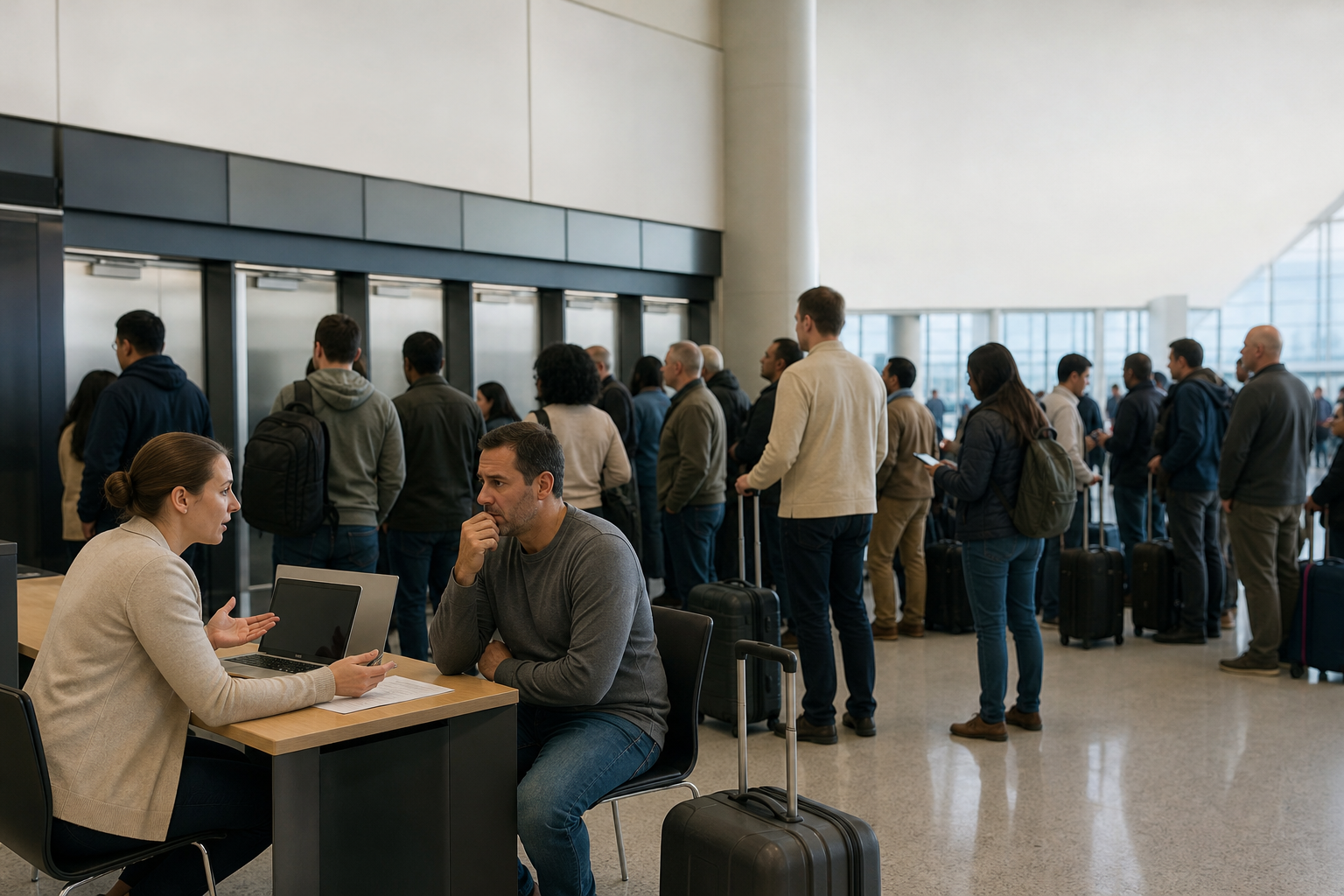
At 3:53 p.m. Eastern on November 13, the Federal Aviation Administration ordered every US airport to hold departing traffic. The agency did not reopen airspace until 8:15 p.m., and airlines warned that untangling the knock-on disruptions would take days.
What happened
Transportation Secretary Sean Duffy traced the failure to outdated copper wire being replaced at a remote facility near El Dorado, Arkansas, according to Insurance Journal. Duffy separately told White House reporters that switches and routers in the FAA's analog telecommunications network became overloaded and stopped passing reliable information to controllers, as Insurance Business America reported.
The scale of the disruption was significant. Aviation data firm Cirium, cited by MarketWatch, put the number of scheduled post-4 p.m. departures at roughly 11,000 flights carrying more than 1.5 million passengers. The Associated Press counted at least 600 diversions while aircraft were still airborne. Business Insurance cited FlightAware figures showing nearly 7,000 flights delayed or canceled. CNN, citing FlightAware, put the Friday total at about 15,000 delayed or canceled flights, and Flightradar24 counted close to 10,000 cancellations to or from US airports through Saturday.
Why it matters for coverage
The outage fell into a gap that producers writing travel policies know well. When air traffic control is the cause of a disruption, carriers generally owe passengers nothing beyond a refund. That shifts the cost of hotels, meals and missed connections onto trip delay, missed connection and interruption benefits, according to Insurance Business America's reporting.
The practical effect is that policyholders who bought travel coverage are better positioned than those who did not, but the adequacy of those benefits depends on policy limits and waiting periods that vary widely. Agents and brokers who write travel lines should expect client questions about what their policies actually covered during this event.
The infrastructure problem behind the outage
The equipment failure was not a surprise to anyone following federal oversight. In a September 2026 report, the Government Accountability Office found that the FAA had not developed a reliable cost estimate or an integrated schedule for its Broad Next Generation Air Traffic Control System modernization program, despite producing thousands of individual project schedules.
Congress provided the FAA with $12.5 billion last year for the modernization effort, but Duffy said more is needed and told Congress the administration would seek an emergency $50 billion request, Insurance Journal reported. Even on the government's own timelines, the system is unlikely to be meaningfully more reliable before the end of 2028, according to Insurance Business America.
The GAO's findings suggest the funding gap is not simply a matter of dollars. Without a credible cost estimate or a master schedule, there is no reliable way to know whether any appropriation is sufficient or whether the work is on track. That ambiguity is relevant to any insurer or reinsurer modeling aviation-related business interruption or travel exposure over the next several years.
What to watch
The emergency funding request will move through Congress, and its fate will shape how quickly the FAA can retire the analog infrastructure at the center of this failure. For travel lines, the more immediate question is whether this event produces a wave of claims that tests policy language around air traffic control delays specifically. Carriers and MGAs writing travel should review how their forms define covered causes of delay and whether ATC failures are treated the same as weather or mechanical issues. The answer is not uniform across the market.
Sources
1. Air traffic ground stop: a 50-year funding gap hits insurers, insurancebusinessmag.com
2. GAO-26-107992, AIR TRAFFIC CONTROL SYSTEMS: Ambitious New Modernization Effort Needs Cost and Schedule Planning, files.gao.gov
3. Airlines Work to Restore Flights as FAA Probes Faulty Router, insurancejournal.com
4. US grounds flights nationwide after air traffic control communications outage - Business Insurance, businessinsurance.com
Insurance Wire provides news and information, not insurance, legal, or financial advice. Consult a qualified professional about your specific needs.